Plumbing in the Northwest Suburbs
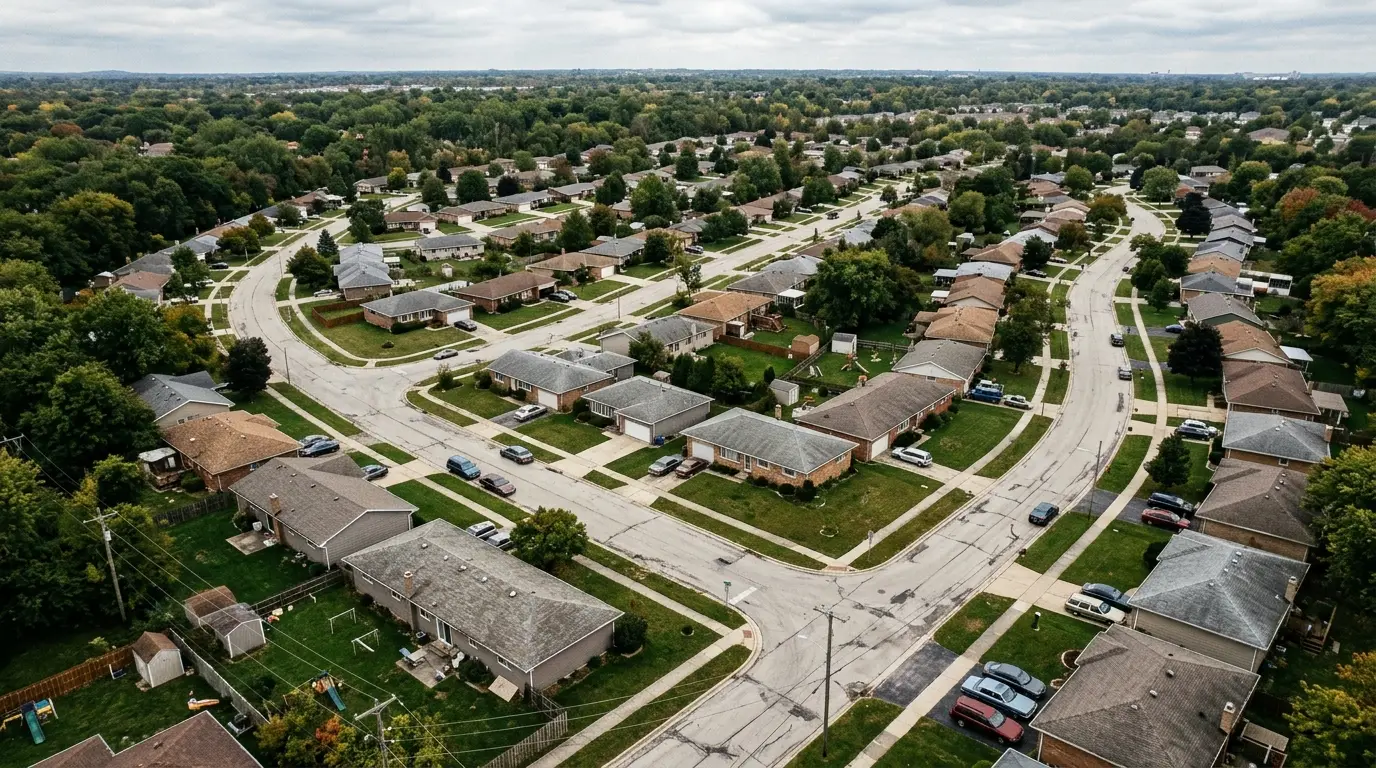
Ranches, splits and 1980s subdivisions, mostly on separated sewers, which makes this pump country rather than sewer country, with a water supply that changed underneath the pipes.
Post-war stock, and what was normal when it was built
The Northwest Suburbs are largely a product of three building waves, and each one left a signature that predicts what will go wrong. The 1950s and early 1960s brought brick and frame ranches on crawl spaces and full basements, plumbed in copper with cast iron drains. The later 1960s and 1970s brought split-levels and bi-levels, which put the laundry and a half bath on an intermediate floor and produced drainage arrangements that are perfectly sound and completely unlike a two-storey house. The 1970s and 1980s subdivisions in Schaumburg, Hoffman Estates and Streamwood brought PVC drainage, plastic supply experiments, and the sump pump as standard equipment.
Two material notes that come up constantly in this stock. Early post-war copper is generally excellent and routinely still original, but thin-wall copper on aggressive water develops pinhole leaks, and the pattern (several small leaks in the same few years, all on horizontal runs) is diagnostic rather than coincidental. And houses plumbed between roughly 1978 and 1995 may carry grey polybutylene supply with plastic or crimped fittings, which failed widely enough to be worth identifying on sight rather than waiting for. Both cases are the same decision: patch the leak or stage a replacement, which is what whole-home repiping exists to reason through.
The split-level detail worth knowing
In a bi-level or split, the lowest fixtures often sit only a little above the building drain, so a partial blockage that a two-storey house would never notice shows up first as a slow floor drain or a backing-up laundry standpipe on the middle level. The symptom is not where the problem is.
The water changed, and the pipes noticed
This is the region's most under-appreciated plumbing fact. Many of these communities spent their first decades on deep wells drawing from the sandstone aquifer (hard, high in iron and, in parts of the region, carrying naturally occurring radium), and then converted to treated Lake Michigan water delivered through regional commissions during the 1980s. Barrington and several outer communities remain on municipal wells today.
What matters is that changing source water changes water chemistry, and water chemistry is what determines how scale and corrosion behave inside existing pipe. Households that had lived with heavy scale suddenly had softer, differently treated water moving through pipe whose interior had adapted to the old conditions. That transition is decades behind us now, but its consequence is still visible: this is a region where you find generously scaled galvanized branches next to sound copper, and where a water heater's actual service life varies more by street than by brand.
Practically: on lake water here, a softener is a preference rather than a necessity for most households, and it should follow a hardness test rather than a sales visit, the reasoning is under water softener installation. On a private well the calculus is different and iron, hardness and, where relevant, radium all belong in the same conversation, which is what whole-house water filtration is for. Test first in both cases.
River flooding is not sewer backup
Along the Des Plaines River corridor (Des Plaines, Mount Prospect, Prospect Heights, Wheeling, Park Ridge) a wet basement has two completely different possible causes, and treating them as one is how households spend money on the wrong equipment.
Riverine and overland flooding is surface water arriving at the building: the river out of bank, or storm water running across ground that cannot absorb it. It comes in through window wells, at grade, and through the foundation. No plumbing device stops it. What helps is grading, window well covers, area drain capacity and, in the worst locations, structural measures.
Sewer backup is water arriving through the drainage system, and it appears at the lowest fixture: a floor drain, a shower, a laundry standpipe. That is the case a backwater valve or an overhead conversion addresses, and the way to tell the two apart is set out in basement flood and sewer backup: where the water first appeared, and whether it smelled.
Much of this region is on separated storm and sanitary sewers, which makes classic surcharge-driven backup less common here than in the older combined-sewer communities to the east and south. That is genuinely good news, and it is also why so much of the seasonal work in the Northwest Suburbs is pump work rather than sewer work.
Sump systems do most of the seasonal work
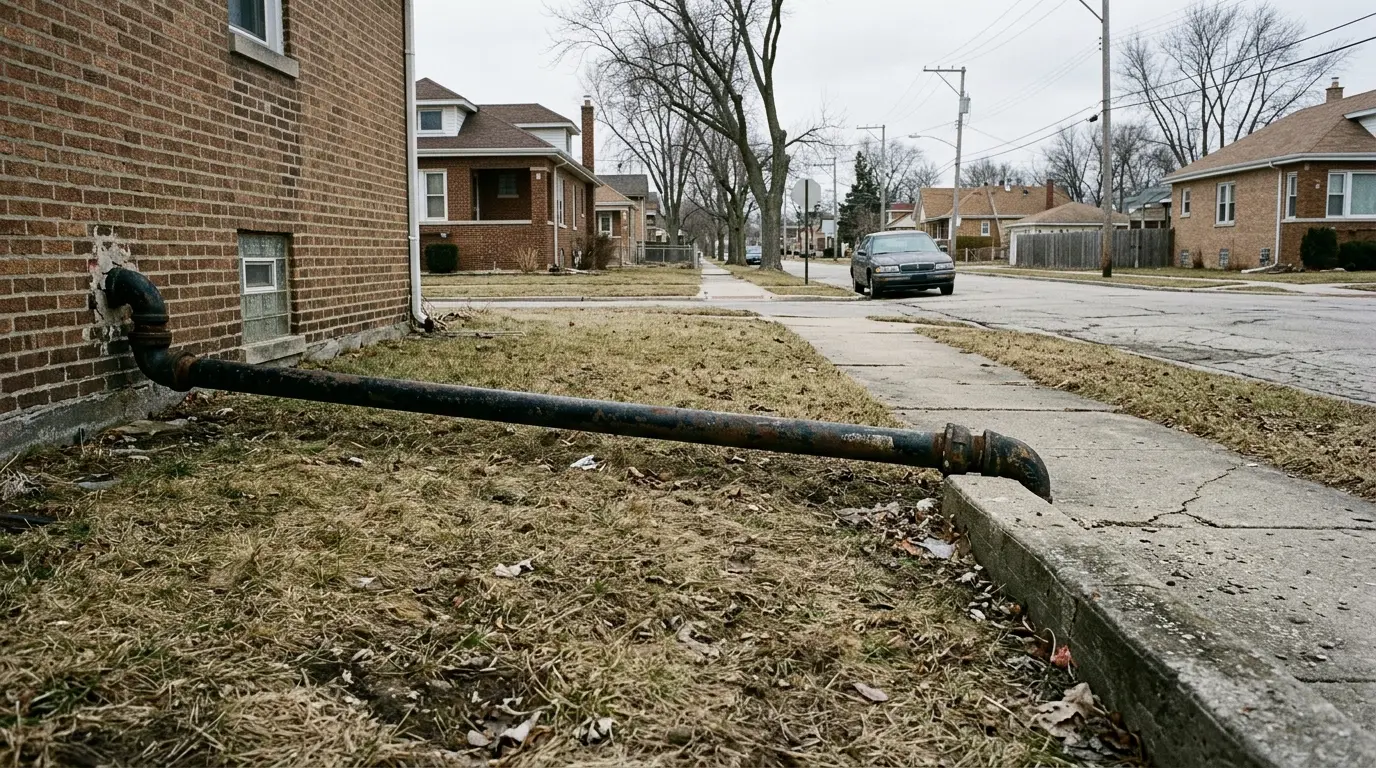
In subdivision housing the pit is a storm appliance: quiet for weeks, then working hard for a few hours. That duty cycle produces its own failure pattern, and it is almost never the pump motor.
What actually fails, in order of how often we see it: a float switch obstructed by the pit's own contents or by a discharge hose resting against it; a check valve that lets the column of water in the discharge line fall back into the pit, so the pump short-cycles and the pit never really empties; a discharge line that terminates too close to the foundation, so the same water arrives again; a frozen discharge in a February thaw, which makes a working pump useless; and no backup at all when the power goes out in the storm that created the need. The order matters because it is the reverse of what most people check. Sump pump work covers the sizing and the backup options honestly, including when a battery system is genuinely enough.
Pump cycling every few minutes, or a basement that got wet in the last storm and you are not sure which kind of water it was? Those are two different diagnoses and one call.
Call about a Northwest Suburbs propertyThe O'Hare corridor
This region carries a concentration of commercial and light industrial property that most of the metro does not: the Elk Grove Village industrial park, the Wood Dale and Schiller Park corridor along the airport, and the retail and restaurant strips through Schaumburg and Arlington Heights. The plumbing there is a different discipline from residential work, and the constraint is almost always the trading day rather than the pipe.
Kitchen grease lines, floor sinks and indirect waste, backflow assemblies with annual testing obligations, and hot water sized for a dish pit rather than a household, all of it is covered under commercial plumbing, including the explicit boundaries of what we do and do not take on. For managed buildings and small blocks, valve mapping and shutdown planning sit under multi-unit building plumbing.
How dispatch works here
Crews work by region rather than being dispatched across the whole footprint, so the plumber arriving in Palatine works Palatine and the towns around it. In practice that means knowing which subdivisions were built with polybutylene, which streets are still on wells, and which villages want a permit for work that touches the parkway.
One honest scheduling note. This region is large and mostly low-density, so an overnight emergency call is a real drive rather than a ten-minute run. If someone closer to you will genuinely arrive sooner during an active flood, a dispatcher should say so, and ours are told to.
What We Dispatch For
Work called in most often across the Northwest Suburbs
Coverage
15 communities
Northwest Cook County, from Park Ridge and Des Plaines out through Schaumburg and Hoffman Estates to Barrington.
Arlington Heights · Barrington · Des Plaines · Elk Grove Village · Harwood Heights · Hoffman Estates · Mount Prospect · Palatine · Park Ridge · Prospect Heights · Rolling Meadows · Schaumburg · Schiller Park · Streamwood · Wheeling
Common Questions
Answers before you call
Do I need a water softener out here?
On treated Lake Michigan water, most households do not need one. It is a preference about how the water feels and how much scale forms, not a necessity. The right way to decide is a hardness test, which costs almost nothing, rather than a sales visit.
On a private well the answer changes, and hardness is usually not the only question: iron, and in parts of this region naturally occurring radium from the deep aquifer, belong in the same conversation. Test first, then size equipment to the result.
How do I tell river flooding from a sewer backup?
Two questions settle it. Where did the water appear first, and did it smell. Water coming in at grade, through window wells, or along the foundation wall is surface water, the river out of bank or storm water running across saturated ground. Water rising out of a floor drain, a shower or a laundry standpipe came through the drainage system.
It matters because they need different money. No plumbing device stops overland water; grading, window well covers and drainage capacity do. Sewer backup is what a backwater valve or an overhead conversion addresses.
How do I know if I have polybutylene pipe?
Look at an exposed supply run in the basement or at the water heater. Polybutylene is grey, flexible plastic, usually half-inch or three-quarter-inch, with plastic or metal crimped fittings, and it was installed in this area from roughly the late 1970s into the early 1990s.
If you find it, you do not have an emergency. You have a planning item. It failed widely enough that identifying it early and staging replacement against remodelling work is far cheaper than replacing it after a failure, and the fittings are usually the first thing to go.
Why does my basement floor drain back up when the laundry runs?
In a split-level or bi-level, the lowest fixtures sit only slightly above the building drain, so a partial blockage that a two-storey house would absorb shows up here first. The laundry discharges a lot of water quickly, the drain cannot take it, and it surfaces at the lowest opening.
So the floor drain is the symptom, not the location. The blockage is usually further along the building drain or in the lateral, and clearing it at the floor drain treats the wrong end of the problem.
How long will it take someone to reach me overnight?
Honestly, longer than in the dense parts of the metro. This region covers a lot of ground at low density, and an overnight call to Barrington or Streamwood is a real drive rather than a short run.
Distance affects arrival time, not the rate for the work. What you should get on the phone is a straight answer about when someone will actually be there, and if a closer option will reach you sooner during an active flood, our dispatchers are told to say so.
Sump pump cycling every few minutes?
That is usually a check valve or a float rather than a pump, and it is the difference between a part and a replacement. Worth diagnosing before the next storm rather than during it.
24/7 · Chicago metro dispatch · (833) 615-3680