Plumbing in Will County
Subdivisions younger than their owners sit beside canal towns built before 1900, and the county's water supply itself is about to change source.
A hundred and thirty years of housing, side by side
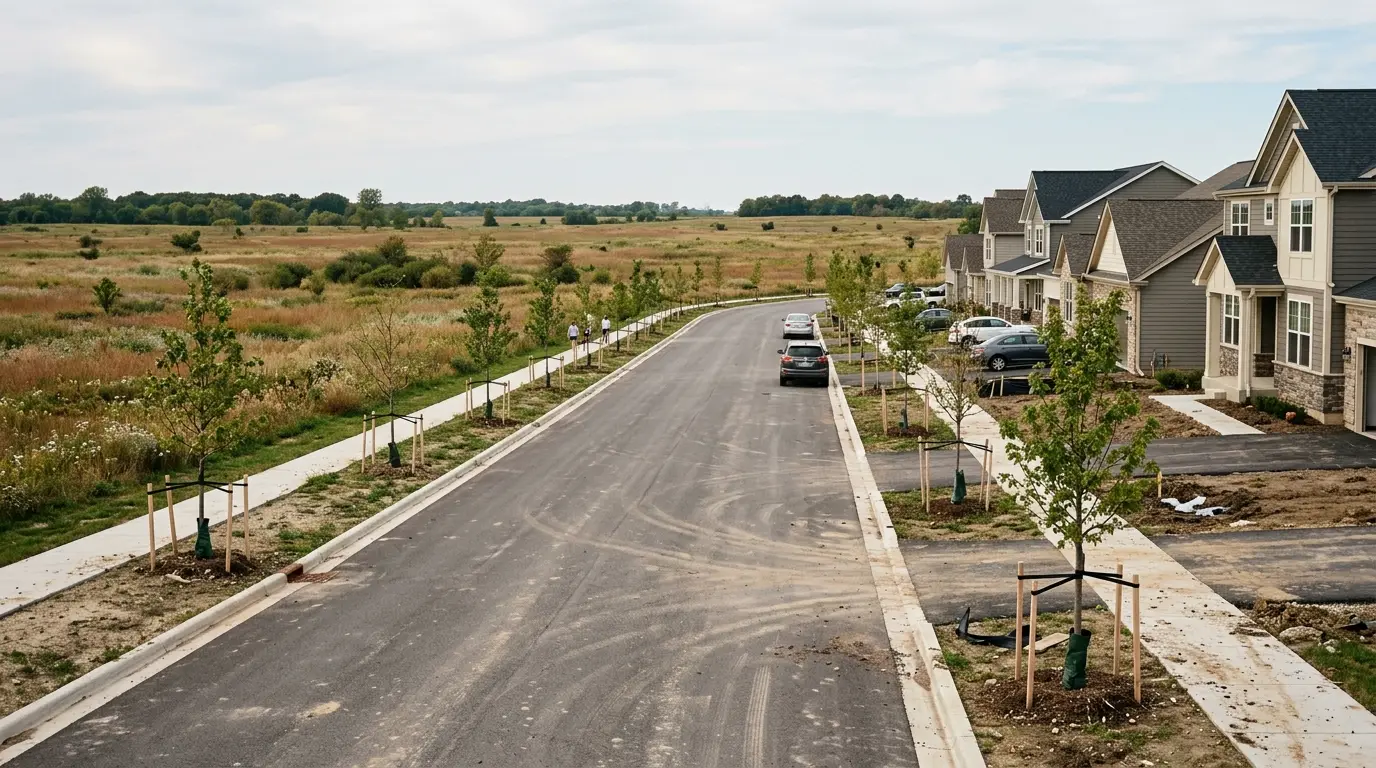
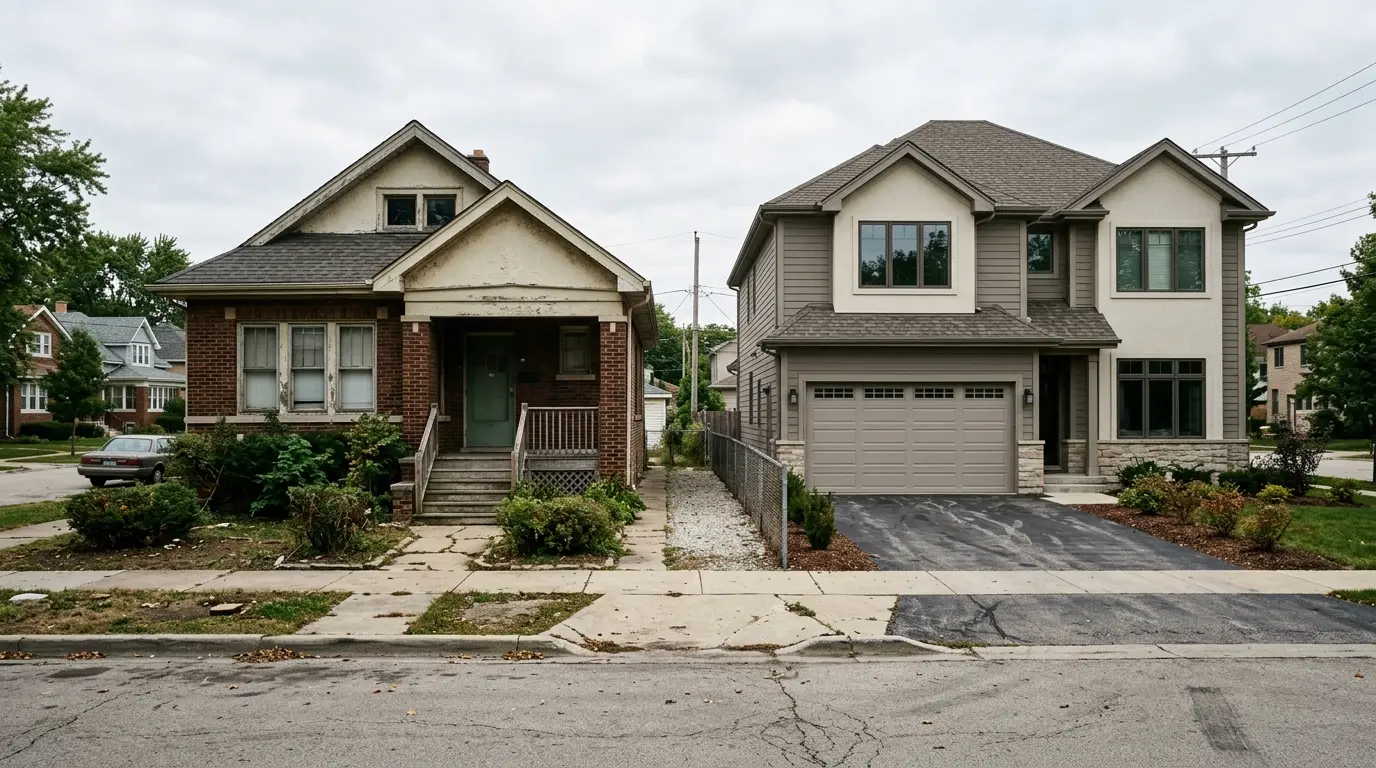
Will County has the widest age spread of any region on this site. Lockport, Joliet and Wilmington are canal-era towns whose oldest housing predates 1900: limestone foundations, galvanized supply, cast iron and clay drainage, combined sewers in the cores. Plainfield, Bolingbrook, Romeoville, Shorewood and New Lenox contain some of the fastest subdivision growth in Illinois over the last three decades, where a great deal of the plumbing is younger than the household living with it. And at the rural edge (Manhattan, Beecher, Elwood, Crete) properties on private wells and septic are still common.
Nothing generalises across that, so this page is organised by which of the three you are in. A plumber who works Plainfield subdivisions all week is not automatically the right person for a limestone-foundation house in Lockport, and we staff accordingly.
The water here is about to change
This is the most consequential fact about plumbing in Will County and almost nobody frames it as a plumbing fact. For a century these communities have drawn from the deep sandstone aquifer, and that aquifer has been drawn down enough that the region has committed to a different source: Joliet and a group of neighbouring communities are building the infrastructure to take treated Lake Michigan water, with delivery planned around the end of this decade.
Why a homeowner should care: changing source water changes water chemistry, and water chemistry is what determines how scale and corrosion behave inside the pipe you already own. This metro has run that experiment twice already. The northwest suburbs switched from deep wells to lake water in the 1980s; most of DuPage did the same in the early 1990s. In both cases households that had lived with heavy scale found themselves with differently treated water moving through pipe whose interior had adapted to the old conditions, and the practical result was a period of surprises, discoloured water while distribution mains adjusted, and existing galvanized and older copper behaving differently than it had.
What to do about it now
Nothing dramatic, and specifically not new treatment equipment bought in advance. What is worth doing is knowing what your own supply piping is made of and what your softener is actually set to, so that when the source changes you are adjusting a known system rather than diagnosing an unknown one.
In the meantime, this remains hard-water territory and softeners here are closer to necessity than preference, sized from a measured hardness figure, as set out under water softener installation. Several Will County communities have also built treatment for naturally occurring radium in the deep aquifer; where you are on municipal water that is the utility's responsibility and its results are published in the annual water quality report, which is a better source than any equipment seller. On a private well it is yours, and it needs testing rather than assuming, see whole-house water filtration.
What fails in subdivision housing
Houses built here from the 1990s onward are generally well plumbed, and the failures are predictable rather than mysterious. Supply is usually PEX, a good material whose fittings reward correct installation and which does not tolerate long-term ultraviolet exposure. Drainage is PVC. Basements are frequently finished, which puts a bathroom or a laundry below the building drain and therefore on an ejector pump in a sealed basin. Sump pits are standard equipment and on the flatter ground west of Joliet they run hard.
Two patterns worth naming. The first is the batch failure: builder-grade tap cartridges, toilet fill valves, angle stops and braided supply lines all go in at once and reach the end of their service lives at once, typically somewhere between ten and fifteen years and sooner on hard water. It presents as the house falling apart and it is really a maintenance cycle arriving, much cheaper handled in one planned visit than as four separate emergencies. The second is the long hot-water run: in a larger two-storey house the distant bathroom can hold several litres of cooling water in the pipe, which a bigger heater does nothing about and a properly piped recirculation loop solves.
The canal towns
Lockport, Joliet's older wards and Wilmington grew up along the Illinois and Michigan Canal, and their plumbing questions are the ones the pre-war city has: galvanized supply scaled from the inside, cast iron building drains that thin along the bottom of horizontal runs and fail under the slab before the stack shows anything, clay laterals with root intrusion at the joints, and service lines from an era when lead was normal.
In those neighbourhoods the sequence that saves money is the same one we use in the near-west suburbs: get footage of the lateral before anybody quotes a repair, because a rodding schedule is not a diagnosis and a clay lateral with roots at one joint costs very different money from one that has lost its shape. That is sewer camera inspection, and the repair options are compared under sewer line repair. Where the cores are on combined sewers, basement backup is a live risk and the protection choices are set out under basement flood and sewer backup.
The DuPage and Des Plaines rivers
Joliet sits where the Des Plaines and the DuPage meet, and both rivers have long flood histories through this county. On the flatter western ground, storm water is slow to leave and sump systems carry the load for days rather than hours after a wet week.
The distinction that saves households money is the same one this site makes everywhere. Water arriving at grade, through a window well, or through a foundation wall is surface water, and nothing installed inside the drainage system prevents it: grading, downspout extensions, window well covers and drainage capacity do. Water rising out of a floor drain, a shower or a laundry standpipe came through the sewer, and that is what a backwater valve or an overhead conversion addresses. During a big storm you can have both at once, which is why the first thing established on site is where the water appeared first.
Ten-year-old house shedding fixtures, or a canal-town lateral that gets rodded on a schedule? Different eras, same principle: diagnose before you buy.
Call about a Will County propertyHow dispatch works here
Will County is worked as its own region rather than served from the city, with crews split between the growth corridor and the older cores because the two need different instincts. On the rural edge, well and septic work is routine rather than a specialty.
Two honest notes. For excavation (a lateral repair, a valve pit, a service line) the locate request and the local permitting and inspection practice are part of the timeline, and practice differs between municipalities here. And the county is large: an overnight call to Beecher or Manhattan is a real drive, so you should get a straight arrival estimate rather than an optimistic window.
What We Dispatch For
Work called in most often across Will County
Coverage
16 communities
Joliet and the southwest growth corridor, from Bolingbrook and Plainfield through Lockport and New Lenox out to the rural edge.
Beecher · Bolingbrook · Crest Hill · Crete · Elwood · Frankfort · Homer Glen · Joliet · Lockport · Manhattan · Minooka · New Lenox · Plainfield · Romeoville · Shorewood · Wilmington
Common Questions
Answers before you call
Will the switch to Lake Michigan water affect my plumbing?
Probably in small ways, and it is worth knowing why. Changing source water changes water chemistry, and chemistry determines how scale and corrosion behave inside pipe whose interior has adapted to decades of the old water. This metro has done it twice before (the northwest suburbs in the 1980s, most of DuPage in the early 1990s), and in both cases there was a period of discoloured water while distribution adjusted and some existing galvanized and older copper behaved differently.
What that does not justify is buying treatment equipment in advance. What it does justify is knowing what your own supply piping is made of and what your softener is set to, so you are adjusting a known system later rather than diagnosing an unknown one.
Do I need a softener in Will County?
For now, in most of the county, yes. Deep aquifer water here is hard, and the cost shows up as shortened water heater life, early cartridge failure and scale on every heated surface. Size it from a measured grains-per-gallon figure rather than a guess or a neighbour's unit.
Once lake water arrives the arithmetic changes and many households will find their existing unit oversized for the new hardness. That is a setting and sizing conversation at the time, not a reason to skip softening in the meantime.
Should I worry about radium in my water?
On municipal water, no: it is the utility's responsibility, several communities here have built treatment for it, and the monitoring results are published in the annual water quality report your village issues. That report is a far better source than anyone selling household equipment.
On a private well it is your responsibility and testing is the only way to know. Radium needs a specific treatment technology rather than a general-purpose filter, which is why the honest first step is a test rather than a purchase.
My subdivision house is ten years old and things keep breaking. Why?
Because the components went in as a batch and are ageing as a batch. Builder-grade tap cartridges, toilet fill valves, angle stops and braided supply lines all reach the end of their service lives within a few years of each other, and hard water brings that forward.
Handle it as one planned visit rather than a series of call-outs. The item worth prioritising is the angle stops and supply lines: they are cheap, they are the most likely thing to fail catastrophically while nobody is home, and replacing them while the cabinet is already open costs very little.
Why does my distant bathroom take so long to get hot water?
Because the pipe between the heater and that fixture is full of cooled water, and all of it has to be pushed out of the way first. In a larger two-storey house that can be several litres. A bigger or hotter water heater does nothing about it.
The proper fix is a recirculation loop with a timer or an aquastat, piped so the circulator can be isolated and serviced later. On some layouts a small point-of-use heater at the far fixture is cheaper, and it is worth pricing both rather than assuming.
Everything in the house failing at once?
In subdivision housing that is a batch of builder-grade components ageing together rather than bad building, and it is far cheaper as one planned visit than as four emergencies.
24/7 · Chicago metro dispatch · (833) 615-3680