Plumbing in the West Suburbs and DuPage
Pre-war villages on combined sewers sit twenty minutes from subdivisions on separated storm systems. Which side of that line you are on predicts most of what will go wrong.
Two housing worlds, twenty minutes apart
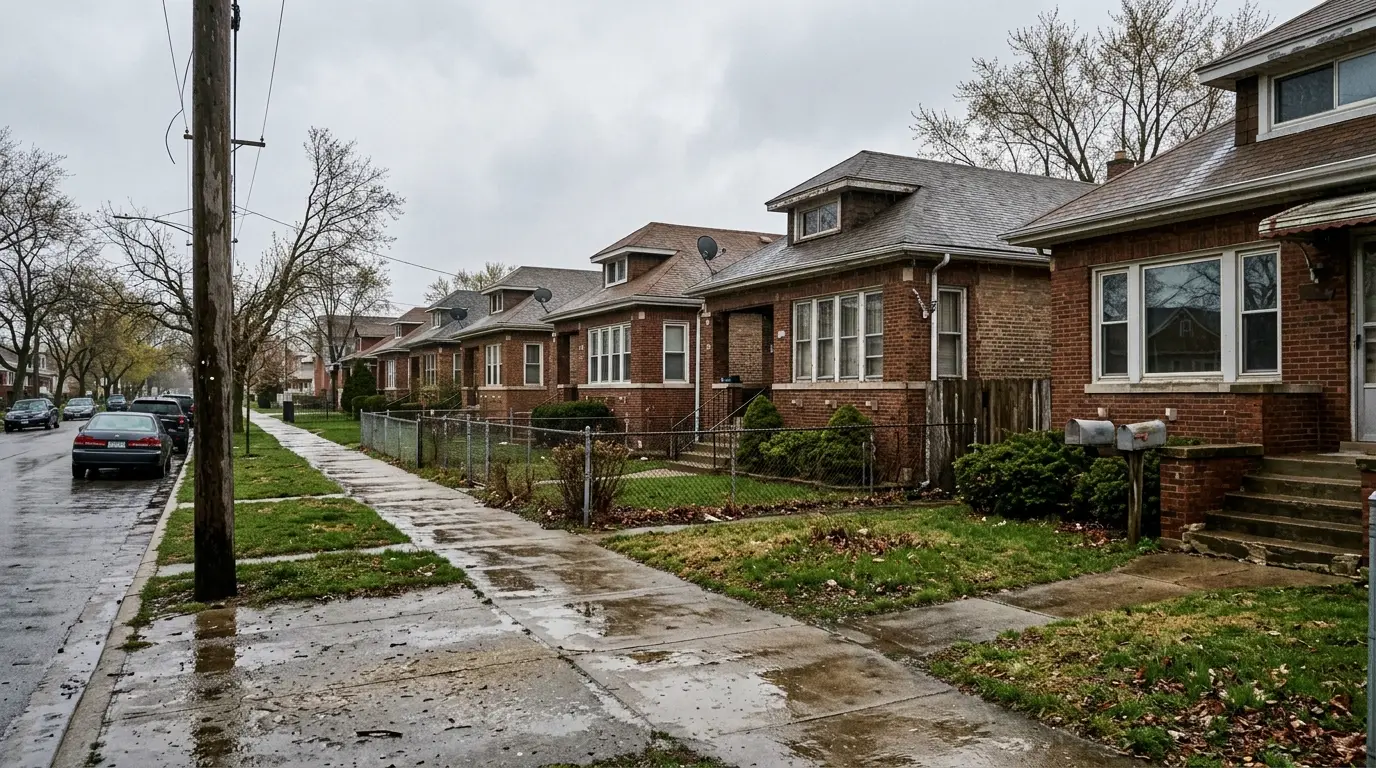
This is the widest region on the site and the least uniform. Oak Park, Berwyn, Cicero, Maywood, Riverside and Forest Park are pre-war villages of brick bungalows, two-flats and greystones on narrow lots, laid out with alleys, built over combined sewers, and plumbed originally in galvanized supply and cast iron and clay drainage. Twenty minutes west, Naperville, Wheaton, Carol Stream and Woodridge are subdivision country: 1970s to 2000s houses on separated storm systems, copper or PEX supply, PVC drainage, and a sump pump in every basement.
Almost nothing generalises across that span, which is why a plumber who works one half of this region well can be genuinely out of his depth in the other. What follows is organised by which world you are in, because that single fact predicts most of what will go wrong.
The question that sorts this region
Does your basement have a floor drain that has ever surfaced water, or a sump pit that runs? The first is combined-sewer country and the conversation is backup protection. The second is separated-system country and the conversation is pumps and discharge routing.
The near-west villages: clay, combined sewers, and backup
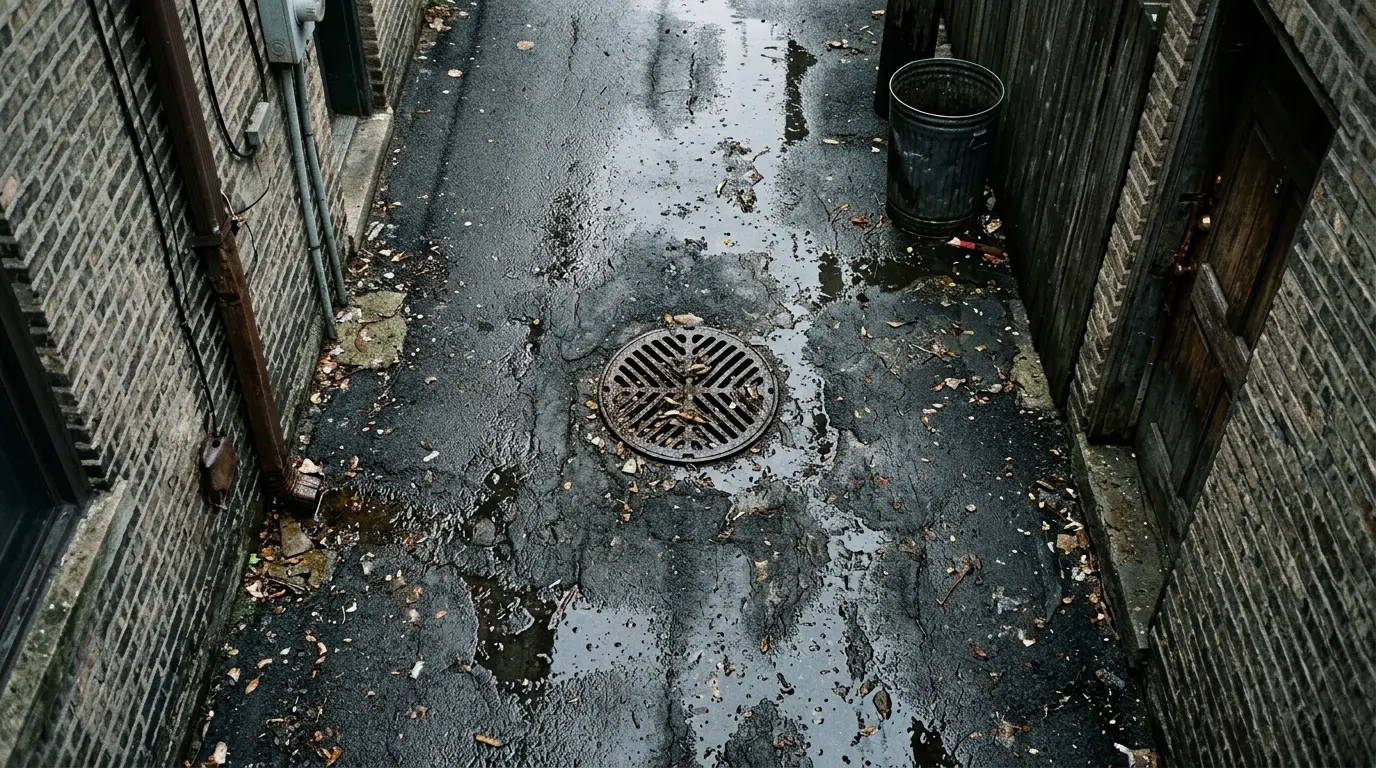
In the pre-war belt the dominant plumbing question is not supply or fixtures. It is whether sewage can reach your basement floor during a storm, and in a combined system, where storm water and sanitary flow share one pipe, the honest answer is that it can, because the street main is designed to fill and your basement floor drain is the lowest opening connected to it.
That produces the sequence we run constantly in these villages. Establish which of the four kinds of basement water actually happened, using basement flood and sewer backup. Get footage of the lateral, because in this housing stock a clay lateral with root intrusion and a lateral that has lost its shape look identical from a floor drain but cost very different money. Then choose protection deliberately: a backwater valve where the fixtures are few and the access is good, or an overhead sewer conversion where there are several below-grade fixtures and the exposure justifies the disruption. Both are compared honestly on their own pages rather than sold here.
Two local specifics. The alleys mean many laterals run to a main behind the property rather than in front of it, which changes where an excavation happens and what has to be reinstated. And mature parkway trees over clay laterals make lining the more attractive renewal method for the same reasons it wins on the North Shore, see trenchless sewer repair.
DuPage: separated systems, sumps, and newer materials
West of the county line the failure mode changes. With storm and sanitary separated, a surcharging storm sewer does not push sewage into the house, so the classic basement backup is much less common. What replaces it is groundwater and surface water: a high water table in the flatter parts of the county, sump pits that run hard for days after a wet week, and discharge lines that decide whether the water leaves or comes straight back.
The newer stock brings its own list. Houses from the 1990s and 2000s frequently have several bathrooms served by long supply runs, which produces the wait-for-hot-water complaint that a recirculation loop solves properly and a bigger heater does not. Finished basements put fixtures below the building drain and therefore on ejector pumps, covered under ejector pump repair and installation. And the earliest generation of plastic supply in this region is now thirty years old, which makes identification worth doing before a failure rather than after.
Where the water comes from
DuPage County's water history is directly relevant to what is inside the pipes. For most of the twentieth century these communities drew from deep sandstone wells (hard water, and in places naturally occurring radium), and from the early 1990s the great majority converted to treated Lake Michigan water delivered through a county-wide commission. A handful of communities remain on municipal wells, and a small number of properties at the edges are on private wells.
Two consequences. Households on lake water often carry softeners installed for well water that no longer need to be sized the way they were, and a hardness test settles that in ten minutes rather than a guess, see water softener installation. And in the older near-west villages, the age of the housing stock means lead service lines and lead solder are a real question rather than a hypothetical, which belongs with the village's own service line records and with water service line replacement rather than with a filter.
Salt Creek, Addison Creek and the Des Plaines
This region is crossed by creeks that flood, and their flooding is not a plumbing problem even when the water ends up in a basement. Salt Creek through Elmhurst, Westchester and Brookfield, Addison Creek through Bellwood and Stone Park, and the Des Plaines through Lyons and Riverside all have well-documented flood histories, and several villages have run substantial stormwater programmes because of them.
What that means for a homeowner is worth stating plainly: if water arrives at grade, through window wells, or through the foundation wall during a heavy storm, no valve and no pump inside the house is the answer, and anybody selling you one for that problem is selling you the wrong thing. Where the same storm also surcharges the sanitary side, you can have both problems at once, which is exactly why the first thing we establish is where the water appeared first.
Basement took water and you are not sure which kind it was? That answer decides whether the fix is a valve, a pump, a grading job, or nothing inside the house at all.
Call about a west suburban propertyCorridors and buildings
Oak Brook's office corridor, the Naperville and Downers Grove retail spread, and the restaurant strips through Oak Park, Berwyn and La Grange all put commercial plumbing into this region in volume: grease interceptors, floor sinks, backflow testing and hot water sized for a dish pit, all covered under commercial plumbing.
The near-west villages also carry a large stock of two-flats and small courtyard buildings, where the plumbing question is usually shared: one lateral, one stack, one service line and no unit shutoffs. That is multi-unit building plumbing, and valve mapping is the first thing worth buying.
How dispatch works here
Fifty-four communities is too many for one crew to know well, so this region is worked in sub-areas: the near-west villages, the central DuPage towns, and the western and southern edge. The plumber who arrives in Berwyn is not the one who covers Naperville, and that is deliberate, the housing stock demands different instincts.
For anything involving excavation, the locate request and the village's own permitting and inspection practice are part of the timeline. Requirements differ noticeably between neighbouring villages here, so the honest answer to "when can you dig" is usually a date rather than tomorrow.
What We Dispatch For
Work called in most often across the West Suburbs and DuPage County
Coverage
54 communities
Near-west Cook County and all of DuPage, the largest single region on the site, worked in sub-areas because the housing stock changes so much across it.
Addison · Bartlett · Bellwood · Bensenville · Berkeley · Berwyn · Bloomingdale · Broadview · Brookfield · Carol Stream · Cicero · Clarendon Hills · Darien · Downers Grove · Elmhurst · Elmwood Park · Eola · Forest Park · Franklin Park · Glen Ellyn · Glendale Heights · Hanover Park · Hillside · Hines · Hinsdale · Itasca · La Grange · La Grange Park · Lisle · Lombard · Lyons · Maywood · Medinah · Melrose Park · Naperville · Oak Brook · Oak Park · River Forest · River Grove · Riverside · Roselle · Stone Park · Villa Park · Warrenville · Wayne · West Chicago · Westchester · Western Springs · Westmont · Wheaton · Willowbrook · Winfield · Wood Dale · Woodridge
Common Questions
Answers before you call
Why do the near-west villages flood and DuPage mostly does not?
Because of what is under the street. The older villages are served by combined sewers, where storm water and sanitary flow share one pipe. When a heavy storm fills that pipe, the lowest opening connected to it is your basement floor drain, so sewage can surface there. Most of DuPage was built with separated systems, so a full storm sewer does not push anything back into the house.
DuPage is not immune to wet basements, it just gets a different kind. There the water is usually groundwater or surface water, which is a pump, grading and discharge-routing problem rather than a backup problem.
Should I fit a backwater valve or convert to an overhead sewer?
It depends on how many fixtures sit below street level and how much disruption is justified. A backwater valve is a short body in the lateral with a hinged flap; it protects everything behind it, needs a proper access pit so it can be serviced, and stops the house draining while the street is surcharged.
An overhead conversion re-routes the building's drainage so nothing below grade relies on gravity to the sewer, with an ejector handling what remains low. It is the more complete protection and much the more disruptive install. Both pages set out the trade-offs rather than recommending one universally.
My new house takes forever to get hot water. Is something wrong?
Usually not. In larger 1990s and 2000s houses the run from the heater to a distant bathroom can hold several litres of water, and all of it has to be pushed out of the way before hot water arrives. A bigger heater does nothing about that.
The proper fix is a recirculation loop with a timer or an aquastat, sized and piped so the circulator can be isolated and serviced later. On some layouts a point-of-use heater at the far fixture is the cheaper answer, and it is worth pricing both.
Do I still need my water softener now that we are on lake water?
Often not the one you have. Softeners in this region were frequently sized for hard deep-well water, and most DuPage communities converted to treated Lake Michigan water in the early 1990s. Lake water is moderately hard rather than very hard.
Get a hardness test before deciding anything. It costs almost nothing, and it tells you whether to remove the unit, resize it, or leave it alone. A few communities here are still on municipal wells, and at the edges some properties are on private wells, where the answer is different again.
Water came in through the window well. Will a valve or a pump fix it?
No, and it is worth being blunt about that. Water arriving at grade, through a window well, or through the foundation wall is surface water. Nothing installed in the drainage system inside the house prevents it.
What helps is grading away from the building, downspout extensions, window well covers and drains, and in bad locations structural work. Where a storm also surcharges the sanitary side you can genuinely have both problems at once, which is why we establish where the water appeared first before recommending anything.
Which kind of water was it?
Sewage through a floor drain, groundwater through the slab, surface water at a window well, and a supply leak all look similar on a wet floor and need completely different money.
24/7 · Chicago metro dispatch · (833) 615-3680