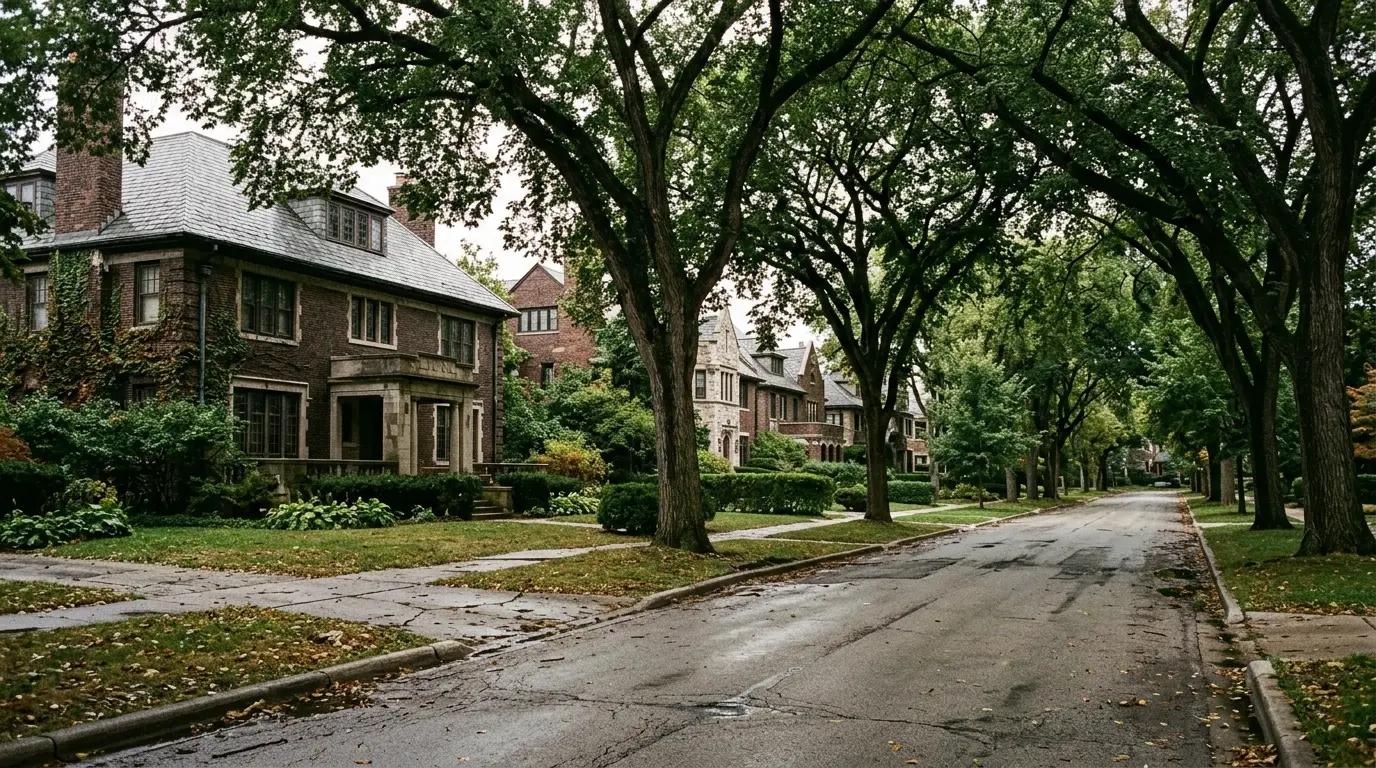
Plumbing on the North Shore
Deep basements near a high water table, century-old clay laterals under a mature tree canopy, and a lot of original steam heat still doing its job. The problems here are consistent enough to name.
Deep basements, and the water table under them
The North Shore's defining plumbing condition is the relationship between how deep the basements are and how high the groundwater sits. The large houses built here between 1890 and 1940 have full basements, often eight or nine feet below grade, and within a half mile of the lake that can put a basement floor at or below the seasonal water table. The consequence is not dramatic and it is not a leak: it is a sump pump that runs several times an hour for weeks after a wet spring, and a house whose dryness depends entirely on a mechanical device continuing to work.
That changes what matters about the equipment. In a subdivision where the pit fills during storms, a pump is a storm appliance. Here it is closer to a continuous-duty machine, and the things that actually determine whether a basement stays dry are the ones people skip: a cast-iron or better pump rather than the cheapest plastic unit, a check valve that does not let the pit refill on every cycle, a discharge line routed far enough from the foundation that the water does not simply return, and a backup that works when the power fails, which on this stretch of lakefront, with mature trees over overhead lines, is a genuine annual event rather than a hypothetical. The reasoning is set out under sump pump repair and installation.
The failure that actually floods these basements
Not a dead pump. A pump running perfectly into a discharge line that freezes, kinks, or dumps two feet from the wall. The pit empties, the water comes straight back, and the pump cycles until it burns out.
Mature trees over clay laterals
The tree canopy is one of the reasons people live here and one of the reasons the sewers need attention. The parkway oaks, elms and maples in Wilmette, Winnetka, Glencoe and Evanston are older than most of the sewer laterals under them, and the laterals are vitrified clay in short sections with mortared joints. Roots do not break into sound pipe for sport; they follow moisture and enter at joints that have already moved. Once inside they thrive, because a sewer is warm, wet and full of nutrients.
The practical pattern in this housing stock is seasonal. A lateral with an established root mass will run acceptably through winter and slow down through the growing season, and the household describes it as a drain that "gets bad in summer." Cutting the roots restores the pipe for a season or two, which is legitimate maintenance rather than a failure, see sewer rodding, but a lateral being cut annually is telling you something about its condition, and that is worth confirming with footage rather than guessing at. Camera inspection distinguishes roots at one joint from a pipe that has lost its shape.
Where the pipe does need renewing, the trees are also the reason lining tends to win the argument here. A conventional dig follows the lateral, which usually means a trench through the root plate of a parkway tree the village will not thank you for damaging, and through a brick or bluestone walk that costs more to reinstate than the plumbing did. Renewing the pipe along its existing route avoids both, and the method and its honest limits are set out under trenchless sewer repair.
Steam and hot-water heat still running
A higher proportion of houses here still run their original hydronic heating than anywhere else in the metro, and that puts plumbing and heating in the same conversation. One-pipe steam, two-pipe steam and gravity hot water converted to circulators all show up regularly, often with the original cast iron radiators and, in the better houses, the original near-boiler piping layout.
These systems are not obsolete and they are not fragile. What they are is unfamiliar, and the commonest expensive mistake on the North Shore is a replacement boiler installed by someone who treated a one-pipe steam system as a hot-water system with bigger pipes. Steam sizing follows the radiation connected to it rather than a heat-loss calculation, the near-boiler piping has dimensional requirements that are not negotiable, and the traps and vents are the parts that decide whether the second floor heats. The detail is under boiler, radiator and steam heat service.
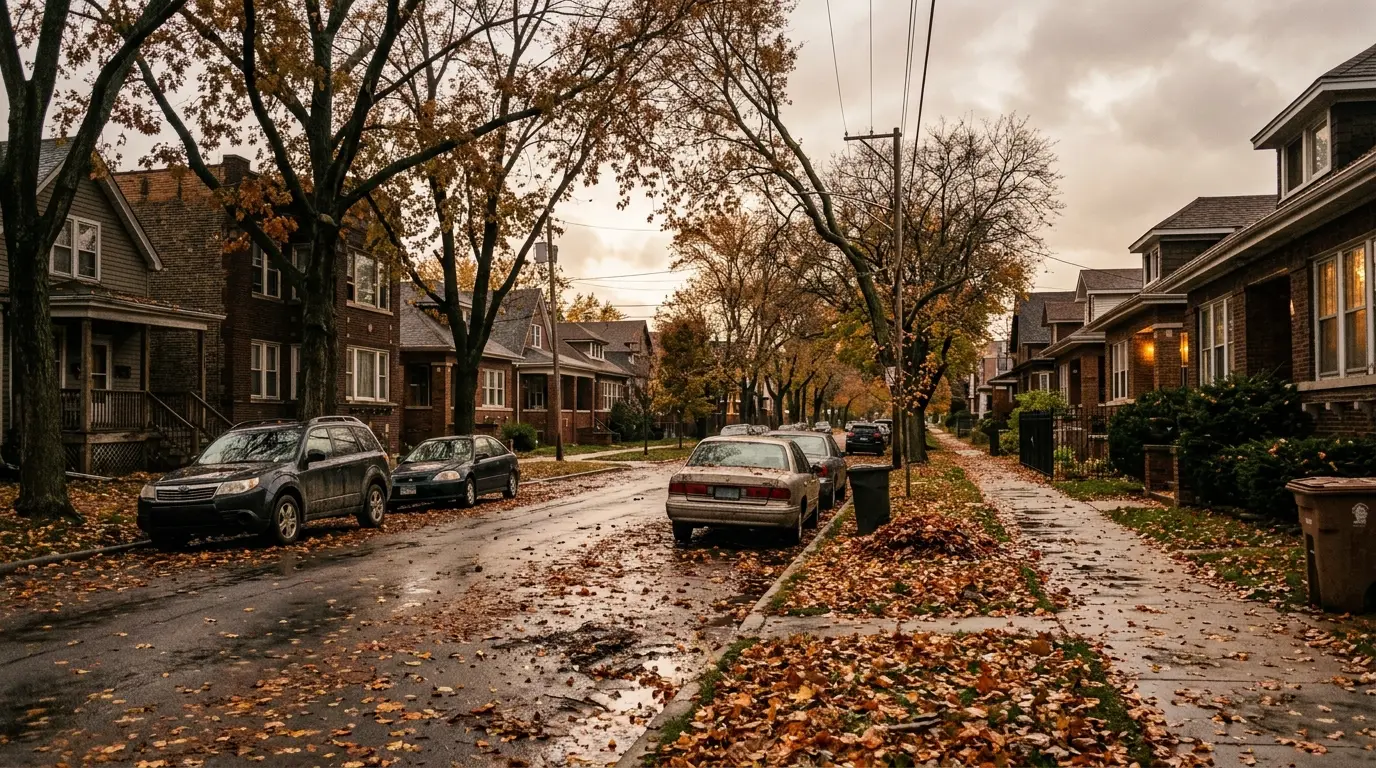
Long service lines, and what they are made of
Two things about supply piping are specific to this stock. The first is distance: a house set well back on a large lot can be seventy to a hundred and twenty feet from the b-box at the parkway, which means more pipe, more joints and more excavation than a compact lot would need for the same repair. The second is material. Houses built before the mid-1980s were plumbed in an era when lead service lines and lead-based solder were both normal, and while lake water in this region is treated to control corrosion, a lead service line is still a lead service line.
The honest position is the one we take everywhere: the material is a matter of record rather than opinion, several North Shore municipalities have been inventorying and publishing their service line materials, and that is the place to start rather than with a device. Where a line is being replaced, replacing it end to end matters, a partial replacement that leaves half the lead in the ground can disturb scale and make water quality worse for a period, which is exactly why we route this question to water service line replacement rather than to a filter sale.
Inside the house, the pattern in the pre-war stock is galvanized supply that has been partially replaced over decades, so a single building may have four materials in it. That is not automatically a problem; what it produces is unpredictable pressure and flow, and the way to establish whether it is worth staging a replacement is set out under whole-home repiping.
Ravines, bluffs and where the water goes
North of Kenilworth the land is cut by ravines running to the lake, and in Winnetka, Glencoe, Highland Park and Lake Bluff a good deal of property drainage is organised around them. That has one consequence worth knowing as a homeowner: on much of the North Shore storm water and sanitary sewage are in separate systems, which is a real advantage, a summer storm surcharging the storm sewer does not automatically push sewage back into your basement the way it does in a combined system.
The trade is that everything about your storm water becomes your responsibility. Sump discharge, downspouts, footing drains and area drains all have to go somewhere legitimate, and a sump line discharging into a sanitary connection is both a code problem and a genuine burden on the treatment system. Where a village has a specific requirement about discharge routing, that is a local question and worth asking before the work rather than after, requirements differ between neighbouring villages here more than people expect.
Lateral rodded every summer, or a sump that has been running since March? Both have a diagnosis behind them rather than a schedule.
Call about a North Shore propertyHow dispatch works here
Crews are assigned by region rather than sent across the whole footprint, so the plumber who comes to Wilmette works Wilmette and the villages around it and knows which street has clay and which has cast iron. That matters less for a water heater and a great deal for a sewer.
Two practical notes. Parking and access on the older streets is genuinely tight, and a job needing a rig at the kerb sometimes needs a village permit for the space, worth raising when the work is booked rather than on the morning. And for anything involving excavation in a parkway, the locate request and any village or forestry review are part of the schedule, not an afterthought; a contractor who promises to dig tomorrow has not made those calls.
What We Dispatch For
Work called in most often across the North Shore
Coverage
19 communities
From Lincolnwood and Skokie up the lakefront to Lake Bluff, including the inland villages that share the same housing stock and the same sewers.
Deerfield · Evanston · Fort Sheridan · Glencoe · Glenview · Golf · Highland Park · Highwood · Kenilworth · Lake Bluff · Lake Forest · Lincolnwood · Morton Grove · Niles · Northbrook · Skokie · Techny · Wilmette · Winnetka
Common Questions
Answers before you call
Why does my drain get worse every summer?
Because roots grow in summer. A clay lateral with root intrusion at a joint runs acceptably in cold months and closes down through the growing season, which is why households describe it as a seasonal drain rather than a blocked one. Cutting the roots restores it for a season or two.
What decides whether that is sensible maintenance or a warning is the condition of the pipe itself, and that needs footage rather than an opinion. A lateral being cut every year with sound pipe walls is a maintenance item; one where the pipe has lost its shape is a repair being deferred.
My sump pump runs constantly. Is something wrong?
Not necessarily. Within about half a mile of the lake, and in any deep pre-war basement, the pit can sit at or below the seasonal water table, so the pump is not responding to storms, it is holding back groundwater continuously. Frequent cycling for weeks after a wet spring is normal in that situation.
What is not normal is the pit refilling immediately after each cycle, which means a failed check valve or a discharge line that returns the water to the foundation. Continuous duty also means the pump wears out faster, so a cast-iron unit and a working backup matter more here than in a subdivision.
Can a sewer be replaced without digging up the parkway tree?
Usually, and on these streets that is the main argument for lining rather than excavating. A conventional dig follows the pipe, which typically means trenching through the root plate of a mature parkway tree and through whatever walk or drive sits above it.
Renewing the pipe along its existing route leaves the tree and the surface alone. It is not right for every lateral, a pipe that has collapsed or lost alignment needs different work, and the honest limits are set out on the trenchless page rather than glossed over here.
Is my old steam boiler worth keeping?
Often, yes. Cast iron radiators and steam distribution are durable and comfortable, and the system is not obsolete simply because it is old. What matters is whether the boiler itself is sound and whether the near-boiler piping and the vents and traps are right.
The expensive mistake in this area is a replacement installed by someone treating one-pipe steam as a hot-water system. Steam sizing follows the connected radiation, the near-boiler piping has real dimensional requirements, and getting either wrong produces a system that never heats the second floor properly no matter how new the boiler is.
How do I find out whether my service line is lead?
Start with the village. Illinois water systems have been inventorying service line materials, and several North Shore municipalities publish what they hold for individual addresses. That is a matter of record and a better starting point than a plumber's guess or a filter salesman's assumption.
If replacement is on the table, do it end to end. A partial replacement that leaves lead in the ground can disturb scale and make water quality temporarily worse, which is why we treat this as a service line question rather than a treatment question.
Sewer slowing down every summer?
On the North Shore that is usually roots at a clay joint rather than anything you did. Footage settles whether it is maintenance or a pipe that has run out of life.
24/7 · Chicago metro dispatch · (833) 615-3680