Plumbing in McHenry, Kane and the Fox Valley
The hardest water in the metro, a lot of properties running their own wells, and river-town housing older than anything around it. Scale is the thread through most of it.
Hard water is the condition here
Every region on this site has a dominant plumbing fact. In the Fox Valley and out through McHenry and Kane it is water hardness, and it is not a marginal difference, water drawn from the deep sandstone aquifer under this corridor is among the hardest supplied anywhere in the metro, commonly several times harder than the treated lake water the eastern suburbs receive.
Hardness is dissolved calcium and magnesium, and what it does is deposit them as scale wherever water is heated or moves fast. The consequences are cumulative and they are all things households here describe as normal: a water heater that loses capacity and starts rumbling within a few years because the bottom is packed with scale; tap cartridges and shower valves failing early because grit and deposit sit on ceramic discs; aerators and shower heads clogging; and a tankless heater that must be descaled on schedule or it will not deliver its rated output. That last one is the honest caveat on the whole tankless proposition in this region, and it is stated plainly on tankless water heater installation rather than buried.
The number that decides your equipment
Grains per gallon, measured, not estimated from your neighbour's softener. A test costs almost nothing and it is the difference between a softener sized for the house and one that regenerates twice as often as it needs to, wasting salt and water for years.
Softening here is closer to a necessity than a preference, which is the opposite of the advice we give on lake water. What still applies is the sequence: test, size by hardness and household demand, and pipe it properly with a bypass and a legitimate drain. That is all under water softener installation. Water heaters in this corridor also earn annual flushing and anode inspection more than anywhere else on the site, see water heater repair.
Radium, and what treatment is actually for
The same deep aquifer that supplies the hardness also carries naturally occurring radium in parts of this region, and a number of communities here have built treatment or blended supplies to address it. It is worth understanding as a homeowner because it is the one water quality question where the answer is genuinely not a device you buy.
Where your water comes from a municipal system, radium is the utility's problem and its treatment and monitoring results are published. The right move is to read your village's annual water quality report rather than to buy equipment, and a plumber telling you otherwise about municipal water is selling rather than advising. Where you are on a private well, common in unincorporated McHenry and Kane, it is your problem, testing is the only way to know, and the treatment that addresses it is a specific technology rather than a general filter. That distinction is what whole-house water filtration exists to make.
Private wells and pressure tanks
A significant share of properties in the outer townships run their own water supply, and the failures are mechanical rather than chemical. The single most common one: the pressure tank's bladder fails, the tank waterlogs, and the pump starts short-cycling every few seconds under load. Motors fail from starting rather than from running, so a waterlogged tank is a pump killer, and it is audible for weeks beforehand.
The rest of the list is short and diagnosable at the tank: a pitted or misadjusted pressure switch, a check valve letting the water column fall back down the well, a clogged sediment screen, and a submersible pump drawing more current for less flow at the end of its life. What matters for a household is that these are staged failures rather than sudden ones, a well system almost always tells you it is unwell before it stops.
The river towns
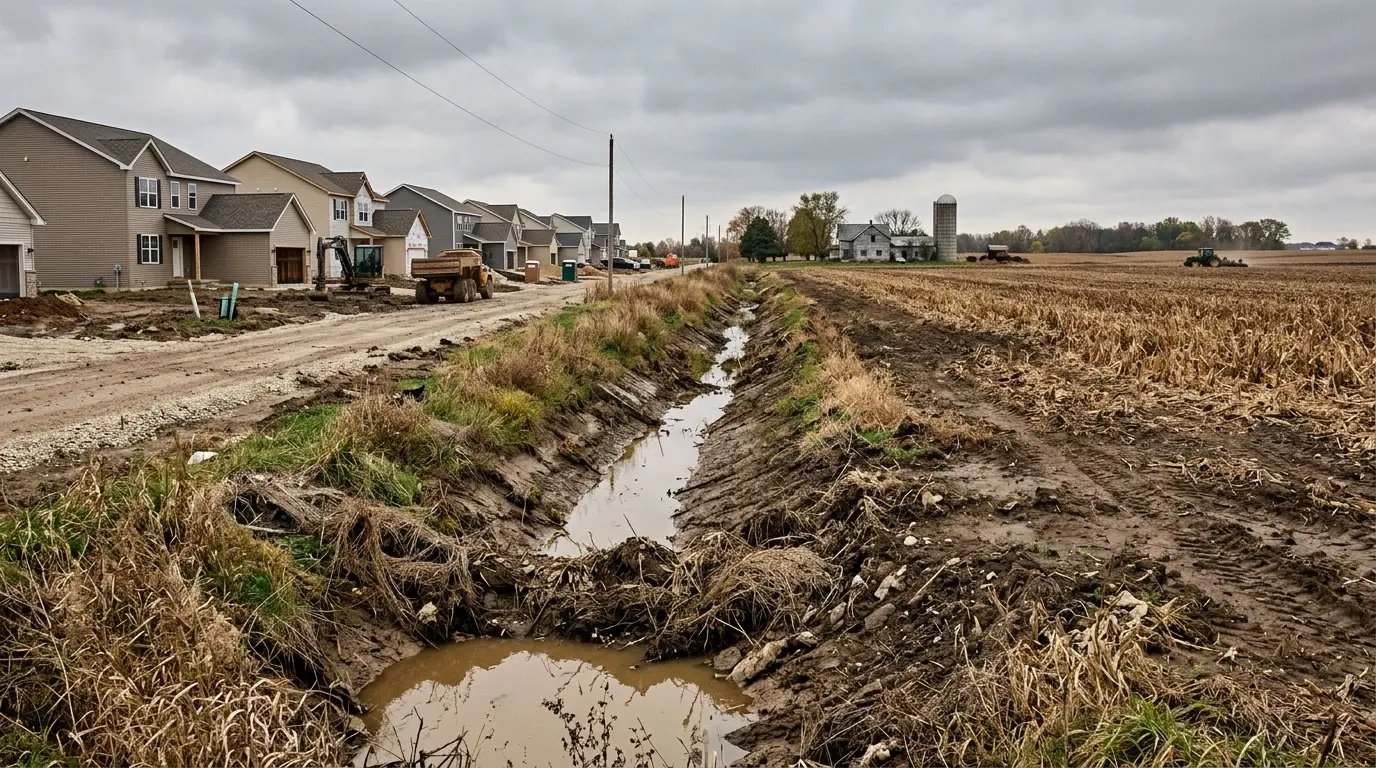
Aurora, Elgin, St Charles, Geneva and Batavia are nineteenth-century river towns with cores much older than the subdivisions around them, and their plumbing reflects that: galvanized supply, cast iron drainage, clay laterals, limestone foundations, and service lines from an era when lead was normal. The complaint pattern in those neighbourhoods looks like the near-west suburbs rather than like the rest of this region: unpredictable flow, repeat blockages in the same place, and questions about service line material.
Those questions have documented answers: Illinois water systems have been inventorying service line materials by address, and that record is the place to start. Replacement should be end to end rather than partial, for the reasons under water service line replacement. Interior galvanized is a staging decision rather than an emergency, covered under whole-home repiping.
The Fox River itself floods, and it does so along a corridor with a lot of housing close to it: Algonquin, McHenry, Island Lake and the smaller lake communities in particular. Same rule as everywhere: water arriving at grade or through a foundation wall is surface water, and nothing installed in the drainage system inside the house prevents it. Anyone offering to sell you a valve for that problem is selling the wrong thing.
Second water heater in a decade, or a softener you inherited and have never had tested against? Both are hardness arithmetic rather than bad luck.
Call about a Fox Valley propertyThe new subdivisions
Huntley, Oswego, Yorkville, South Elgin and the edges of Algonquin carry a great deal of housing built since 2000, and it has its own predictable list. Supply is usually PEX, which is a good material with fittings that reward being installed correctly. Drainage is PVC. Basements are finished more often than not, which puts fixtures below the building drain and therefore on ejector pumps. Sump pits are standard, and on the flatter ground they work hard.
The failure that surprises people in this stock is builder-grade fixtures reaching the end of their lives all at once at around ten to fifteen years: tap cartridges, toilet fill valves, angle stops and supply lines, accelerated by the hardness. It reads like the house falling apart and it is really a batch of components ageing together, which is a much cheaper thing to deal with in one visit than one emergency at a time.
How dispatch works here
Thirty-two communities across two and a half counties is a lot of ground, so this region is worked in sub-areas along the corridor: the Fox River towns, the McHenry County lakes, and the southern Kane and Kendall growth edge. Crews here carry softener and well-system work as routine rather than as a specialty, because that is what the region actually needs.
Honest scheduling note: the outer townships are a real drive. For an overnight emergency in Marengo or Hampshire you should be given a straight arrival estimate rather than an optimistic one, and if somebody closer will genuinely reach you sooner during an active flood, our dispatchers are told to say so.
What We Dispatch For
Work called in most often across McHenry County, Kane County and the Fox Valley
Coverage
32 communities
The Fox River corridor from Algonquin and McHenry down through Elgin, St Charles and Aurora to Oswego and Yorkville, plus the northwest edge of the metro.
Algonquin · Aurora · Batavia · Burlington · Carpentersville · Cary · Crystal Lake · Dundee · Elburn · Elgin · Fox River Grove · Fox Valley · Geneva · Gilberts · Hampshire · Huntley · Island Lake · Lake in the Hills · Marengo · McHenry · Mooseheart · Oswego · Richmond · Ringwood · Saint Charles · South Elgin · Spring Grove · Union · Wasco · Wonder Lake · Woodstock · Yorkville
Common Questions
Answers before you call
Do I really need a water softener out here?
In most of this corridor, yes, and that is the opposite of the advice we give on treated lake water. Deep aquifer water here is among the hardest supplied anywhere in the metro, and the cost shows up as shortened water heater life, early tap cartridge failure, clogged aerators and scale on every heated surface.
What still matters is the sequence. Get a measured grains-per-gallon figure, size the unit to that number and the household's actual demand, and pipe it with a bypass and a proper drain. A softener sized by guesswork regenerates more often than it needs to and wastes salt and water for years.
Is a tankless heater a good idea with water this hard?
It can be, but only with the descaling built into the plan rather than treated as optional. A tankless heater passes water across a compact heat exchanger, and scale on that exchanger reduces output directly, so in this region the unit needs descaling on a schedule and ideally isolation valves fitted for it at installation.
With softened water and scheduled service, tankless works well here. Without either, it will underperform its rating within a couple of years, and we would rather say that before the sale than after.
Should I buy a filter because of radium in the water?
If you are on municipal water, no. That is the utility's responsibility, and communities in this region have built treatment or blended supplies to address it. Read your village's annual water quality report; it publishes the monitoring results. Anyone selling you household equipment for municipally treated water is selling rather than advising.
On a private well it is your responsibility, and testing is the only way to know. Radium needs a specific treatment technology rather than a general-purpose filter, which is exactly why we test before recommending anything.
My well pump cycles constantly. What is wrong?
Nearly always the pressure tank rather than the pump. The bladder inside fails, the tank waterlogs, and with no air cushion left the pump starts and stops on every small demand.
Replace the tank at that stage. Pump motors fail from starting rather than running, so short-cycling is what kills them, and a tank is a fraction of the cost of a submersible pump and a well crew to pull it.
Everything in my ten-year-old house is failing at once. Is it badly built?
Usually not. Builder-grade fixtures go in as a batch and reach the end of their service lives as a batch: tap cartridges, toilet fill valves, angle stops and braided supply lines all start failing around the same few years, and hard water accelerates every one of them.
It reads like the house falling apart and it is really a maintenance cycle arriving. Dealing with it in one planned visit, particularly replacing the angle stops and supply lines before one of them fails while nobody is home, costs far less than handling it as a series of emergencies.
Third set of tap cartridges in five years?
In this corridor that is hardness rather than bad fixtures. A measured grains-per-gallon number tells you whether softening pays for itself, and how big the unit needs to be.
24/7 · Chicago metro dispatch · (833) 615-3680