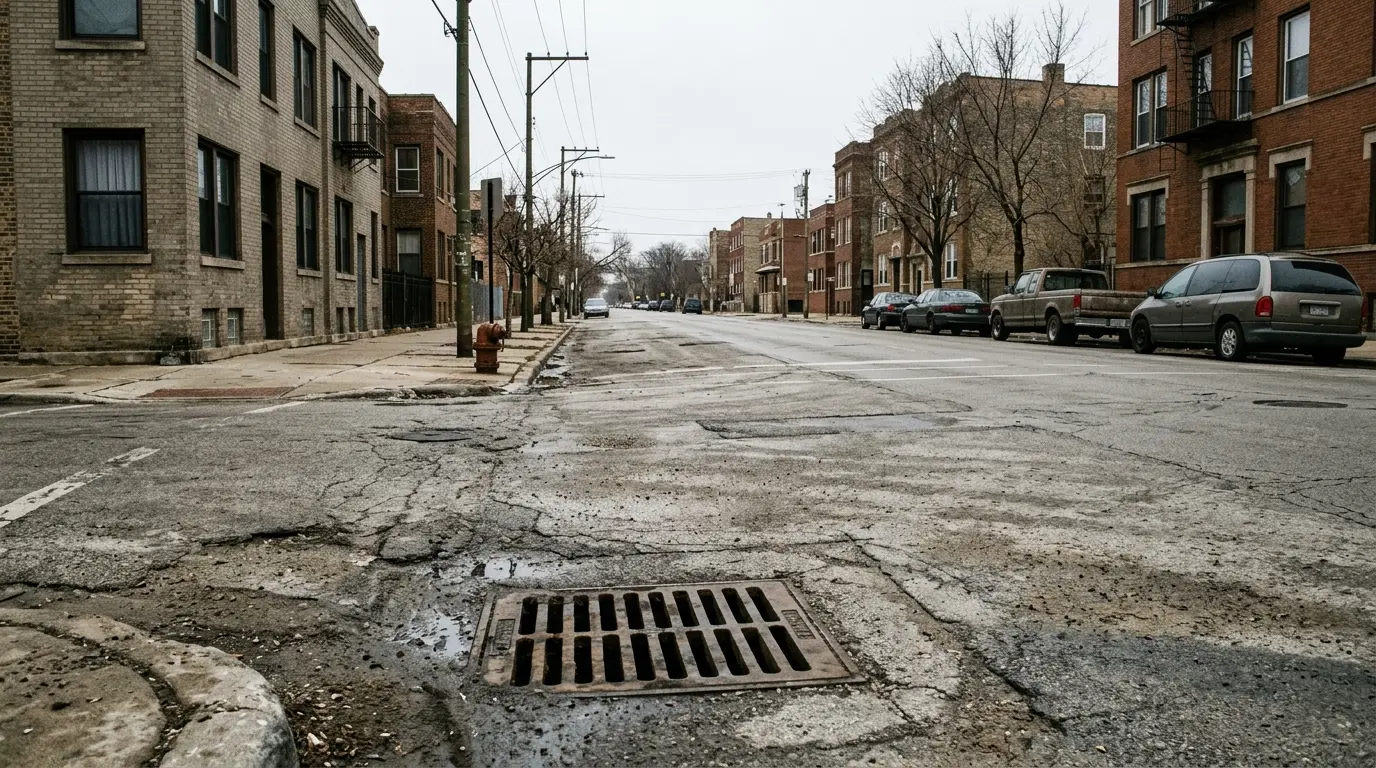
Plumbing on the South Side
Flat ground, a combined sewer system, and a housing stock of brick bungalows and two-flats with deep basements. Which is why here, more than anywhere in the city, the weather sets the caseload.
Why the storms set the caseload
Two conditions define plumbing on the South Side and neither is about the buildings. The first is that the ground is flat, so water has nowhere to go by gravity and drainage depends entirely on the system built for it. The second is that the sewer under the street is combined: it carries sanitary waste from the buildings and stormwater off the roofs and pavements in the same pipe. Put those together and heavy rain becomes a plumbing event rather than a weather event.
What happens in a real downpour is hydraulics, not fault. Rain arrives faster than the main can carry away, the water level inside it rises above the level of basement floors along the block, and the system finds the lowest opening it can reach: a floor drain, a shower pan set into the slab, a laundry tub. Households read that as the sewer backing up, which is exactly right, and then assume their own line must be blocked, which it usually is not.
The distinction is worth insisting on, because it decides what work is appropriate. A private lateral that is root-blocked or broken gives trouble in dry weather as well and shows up plainly on camera. A line that behaves perfectly for months and floods only during downpours is the surcharge case, and no amount of rodding will change it. The full diagnostic sits on basement flooding and sewer backup.
If the water arrives only when it rains hard
Then a cleaning is the wrong purchase. The cause is outside your property line and the remedies are a valve or a re-drain, anyone selling you a rodding for a storm problem is selling you a service that cannot hold.
The two real remedies
There are exactly two pieces of work that stop storm backups, and they are not interchangeable. A backwater valve is fitted in the building’s drain line and closes automatically when flow reverses. It is the smaller and cheaper intervention, it does not change how the basement is used, and for a great many houses it is the correct answer. Its limitation is inherent rather than a defect: while it is closed against the sewer, the building cannot discharge either, so water used inside during the storm has nowhere to go.
An overhead sewer conversion re-drains the building so that everything above the surcharge level flows out by gravity as before, and everything below it (the floor drain, a basement bathroom, the laundry) is collected and pumped up by an ejector. It is a larger job, it changes the basement, and it is the more complete answer. On a house that has flooded more than once, it is generally the work that ends the story rather than deferring it.
Which one fits is decided by how the building is drained today, what is below grade, and how much of the basement matters to the household, not by preference. That is why the useful first visit here is diagnostic: footage of the line, the elevations, and where the fixtures sit relative to the sewer.
Bungalows, two-flats and greystones
The housing on these blocks is mostly brick built between about 1900 and 1940: bungalows on generous lots, two-flats, and greystones in the older neighbourhoods closer in. Lots here are frequently wider than the twenty-five feet standard further north, which changes the work in a useful way. There is often room to get equipment to the side of the house, and the laterals run further but with better access.
Materials are the vintage’s: galvanized steel supply that has been closing up from the inside for a century, cast iron drain and vent that thins along horizontal runs and at the hub joints, and clay laterals out to the main. None of that is unusual for Chicago. What is characteristic of the South Side is the interaction with the storm problem: cast iron house drains under the basement floor in buildings that have taken water repeatedly are the ones that fail earliest, because they have spent decades wet on the outside as well as the inside.
The other recurring item is the water heater. In a basement that has flooded, a heater that was submerged even briefly is not repairable regardless of how it seems to behave afterwards, the controls and the burner assembly are the problem, not the tank. That judgement, and what to check before deciding, is on water heater repair.
Finished basements and what sits below grade
A large share of South Side basements are finished, and many contain a second bathroom, a laundry, or a bar sink. Every one of those fixtures sits below the level of the sewer, which is what makes the storm question consequential rather than academic: the same surcharge that would once have come up through a bare floor drain now arrives in a finished room.
Where a basement bathroom exists, it drains through an ejector pump in a sealed pit, and that pump is worth understanding as a maintenance item rather than a fixture. It is also worth knowing that an ejector and a sump pump are different machines doing different jobs (one moves waste, the other moves groundwater), and many basements here have both. Substituting one for the other, which happens, gives a pump that fails early and messily.
The order of work matters more than the individual pieces. Protect the drainage first, confirm the pumps and any backup power second, deal with the grading and the downspouts outside third, and finish the basement last. Reversing that sequence is the most expensive way to learn which step was skipped.
What We Dispatch For
Work called in most often on the South Side
Coverage
Where this covers
Bridgeport and Armour Square east to the lake, through Bronzeville and Hyde Park, and south through Chatham and Grand Crossing.
Bridgeport · Armour Square · Canaryville · Douglas · Bronzeville · Grand Boulevard · Oakland · Kenwood · Hyde Park · Washington Park · Woodlawn · South Shore · Greater Grand Crossing · Chatham · Avalon Park · New City
Common Questions
Answers before you call
Backwater valve or overhead sewer, which do I need?
It depends on how the building drains and on how much protection the situation justifies. A backwater valve sits in the line and closes when flow reverses, so it stops the sewer coming back at you, but while it is closed the building cannot discharge either, which matters if water is still being used inside. It is the smaller, cheaper, less disruptive option and for many houses it is the right one.
An overhead conversion re-drains the building so its discharge enters the sewer above the surcharge level, with anything below that level pumped up by an ejector. It is a bigger job and it changes the basement, but it is the more complete answer, and on a building that has flooded repeatedly it is usually the one that ends the problem. The two pages set out the trade-off in full, the honest version is that a plumber who recommends one without looking at how your basement is drained is guessing.
My neighbours flood and we never do. Why?
Because surcharge finds the lowest opening on the block, not every opening. The water level in the main rises the same amount for all of you, but it only comes out where a fixture or a floor drain sits below that level, so a house with a shallower basement, a higher floor drain, or a valve already fitted stays dry while the one next door does not.
It also means the situation can change without anything changing at your house. A neighbour installing protection, a building being renovated, or the alley being repaved can all shift where the lowest opening is. Being dry for twenty years is not evidence of being safe; it is evidence of having been higher than someone else.
Can I finish the basement if I put a valve in?
A valve improves the odds considerably and it does not make the basement dry by definition. It protects against sewer water coming back through the drainage system, which is the most common cause of a finished basement being ruined here. It does nothing about groundwater through the floor or walls, nothing about surface water at a window well or an areaway, and nothing about a failure inside the building.
So the sequence worth following before spending money on finishes is: protect the drainage, confirm the sump and its backup if there is one, sort out the grading and the downspouts outside, and only then finish. Doing it in the other order is how people find out which of those they skipped.
The city rodded the main and it still backs up.
That is consistent with surcharge rather than blockage, and it is useful information rather than a contradiction. If the public main is clear and the water still arrives during heavy rain, the cause is capacity in a storm, which is not something rodding, theirs or ours, can address.
It is also worth separating the two cases, because both exist on these blocks. A root-blocked or collapsed private lateral gives trouble in dry weather too, and shows up on camera. A line that behaves perfectly except during downpours is the surcharge case, and it needs a valve or an overhead conversion rather than another cleaning.
Elsewhere in the City
The other sides
Same thing every big storm?
Then the problem is not your line and cleaning it will not hold. There are two remedies that actually work, they cost very different amounts, and which one suits your building is decided by how it is drained today.
24/7 · Chicago metro dispatch · (833) 615-3680