Plumbing on the Northwest Side
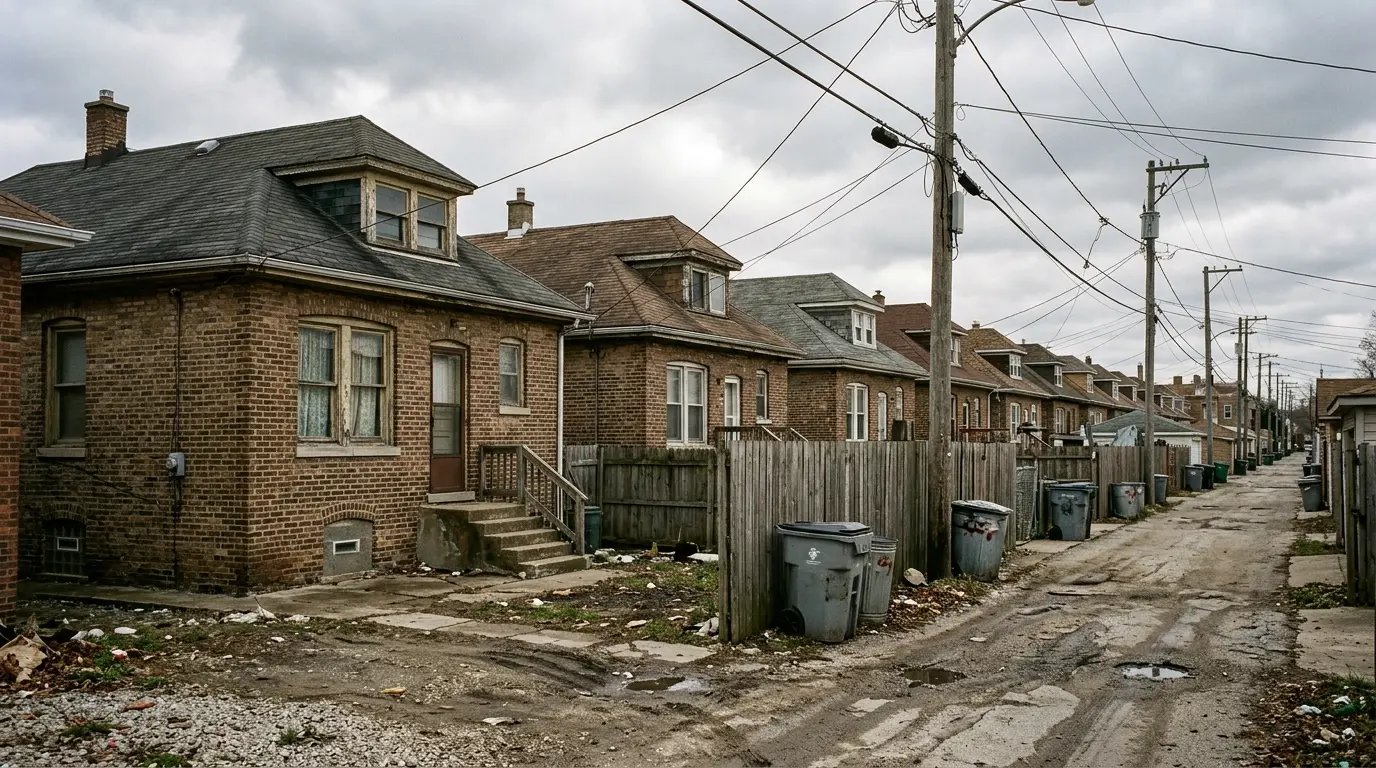
This is the bungalow belt: brick single-family houses on twenty-five-foot lots, built mostly between 1910 and 1930, and repeated street after street. The plumbing repeats with them.
The Chicago bungalow as a plumbing type
The Northwest Side is where the bungalow belt is densest, and that makes the plumbing here more predictable than anywhere else in the city. These are brick single-family houses on twenty-five-foot lots, built mostly between 1910 and 1930, with a full basement, a low-pitched roof, and the kitchen and bathroom stacked over the same corner of the foundation. Street after street of them were built by the same handful of builders to the same handful of plans, which means a plumber who has worked one has largely worked all of them.
The practical value of that is diagnostic speed. The shutoff is where it always is. The cleanout is where it always is. The original bathroom sits above the same corner of the basement, the kitchen drain joins the house drain at the same sort of point, and the lateral leaves the building toward the street on the same alignment. Nothing about a bungalow call starts with a search, which is why the work here tends to be about the pipe’s condition rather than about finding it.
What varies is what has been added since: a second bathroom in a dormered attic, a finished basement with a bar sink and a laundry, a kitchen extended into the rear. Those additions are where the plumbing stops being standard, and they are where most of the problems on these blocks actually originate.
Original supply, a century on
The supply pipe these houses were built with is galvanized steel, and it fails on a schedule rather than by accident. Corrosion builds on the inside wall, the bore narrows, and flow drops so gradually that households adapt to it without noticing, the shower has always been like that. The confirmation is the first draw after the house has been quiet, which comes out discoloured because the loose material has had time to settle in the pipe.
Two things follow. The first is that a new fixture will not fix it: the restriction is upstream, and a better shower head on a starved line is a worse shower. The second is that the problem is worst at the far end of the longest run, which in a bungalow is usually the bathroom someone added upstairs. Repiping is the actual remedy, and the reason it is not a crisis is that galvanized gives years of warning before it starts leaking. It is work to plan rather than work to rush.
Two symptoms, one cause
Gradual pressure loss upstairs plus rusty water on the first draw is not two problems and it is not the water main. It is the inside of your own supply pipe, and no fixture swap will change it.
Clay laterals and parkway trees
The sewer lateral running from a 1920s bungalow to the main in the street is vitrified clay, laid in short sections with mortared joints, and the parkway above it carries mature elm, ash and maple. Roots find the joints, because a sewer joint offers water and warmth and nothing else in a parkway does. The result is the seasonal pattern that dominates sewer work on these blocks: a line that drains acceptably through the winter and closes down through the growing season, year after year.
Rodding cuts the intrusion and restores the line for a season or two, and for many houses that is a perfectly rational maintenance cycle. What decides whether it is maintenance or deferral is the state of the pipe around the roots, and that is a question only camera footage answers. Sound walls with roots at a joint means keep rodding. A pipe that has dropped, cracked or lost its round means the roots are a symptom.
When the pipe itself is finished, the parkway tree becomes the argument for renewing the line along its existing route rather than trenching it, a conventional dig here goes through the root plate of a tree the street is named for, and usually through the front walk as well. The limits of that approach, including the cases where it is the wrong call, are set out on trenchless sewer repair.
Bathrooms added upstairs later
Almost every bungalow with a dormered attic has a bathroom that was not in the original house, and those retrofits are responsible for a disproportionate share of the calls here. Getting drainage and venting up into an attic through a masonry shell is genuinely awkward, so it was frequently done to the standard of the decade it happened in rather than to the standard of the plumbing below it.
Two failure patterns recur. Drainage that was tied in undersized or with too little fall gives a slow tub and a toilet that needs a second flush, and no amount of clearing changes it because the geometry is the problem. Venting that was borrowed from an existing stack rather than run properly gives gurgling, a smell that appears when another fixture is used, and a trap that loses its seal, which is a sewer gas issue rather than a nuisance. Both are diagnosable in one visit, and both are worth understanding before a bathroom is renovated around them, because that is the moment the pipework is accessible and the cheapest time to correct it.
What We Dispatch For
Work called in most often on the Northwest Side
Coverage
Where this covers
Jefferson Park and Portage Park out to the city limits at Edison Park, and south through Belmont Cragin and Avondale.
Jefferson Park · Portage Park · Old Irving Park · Irving Park · Albany Park · Norwood Park · Edison Park · Gladstone Park · Forest Glen · Sauganash · Dunning · Montclare · Belmont Cragin · Hermosa · Avondale · Logan Square
Common Questions
Answers before you call
The sewer gets rodded every year. Should I just replace it?
Not on a schedule, and not on a salesman’s say-so, on the condition of the pipe. Annual rodding of a clay lateral with sound walls is legitimate maintenance, and plenty of bungalows have run that way for decades without incident. The same interval on a pipe that has lost its shape, dropped at a joint or started to hold water is a repair being postponed, and the postponement is what turns into an excavation at the worst possible time.
The difference is visible on camera and invisible from the cleanout. One inspection tells you which situation you are in, and it is worth having before the third or fourth rodding rather than after.
Pressure upstairs is poor and the water runs rusty at first. Why?
That pair of symptoms is close to diagnostic for original galvanized steel supply. The pipe corrodes from the inside, so the bore narrows and the debris that comes loose shows up as discoloured water on the first draw after the house has been quiet, overnight, or after a weekend away.
It also explains why the problem seems worse upstairs: the added bathroom on the second floor is at the end of the longest and most restricted run. Replacing the fixture will not recover the flow, because the restriction is in the pipe feeding it.
Is there a catch basin in my yard?
On a bungalow of this vintage, quite possibly, a concrete pit between the house drain and the sewer lateral, with a lid at grade in the gangway or the back yard. Many are now under pavement, decking or a flower bed, and plenty of owners have no idea they have one.
It matters because a full basin produces exactly the symptoms people attribute to the sewer line: a whole-house drain that runs slow, and rodding that only holds for a month or two. Pumping the basin is a different job from rodding the line, so establishing whether yours is live, filled or bypassed comes first.
How disruptive is repiping a bungalow?
Less than most people expect, because the house helps. A bungalow’s layout stacks the wet rooms and leaves a full basement below them, so most of a new supply system can be run in the basement ceiling and up through closets and chases rather than through finished walls.
The route is decided before anything opens, and the honest version of that conversation includes which walls do need to be opened and what the patching looks like. The place where bungalows genuinely cost more is a bathroom added into a dormered attic, where the pipe has to get up two floors on the inside of a masonry shell.
Elsewhere in the City
The other sides
Rodded the same line again this year?
On these blocks that usually means roots at a clay joint, and the useful question is whether the pipe around the roots is still sound. Footage answers it, and it decides whether you are maintaining a line or deferring a repair.
24/7 · Chicago metro dispatch · (833) 615-3680