Plumbing on the Far South Side
Low ground near the Calumet, a water table that sits close to basement floors, and pumps that are not storm appliances here but machines running most of the year.
Low ground and the water table
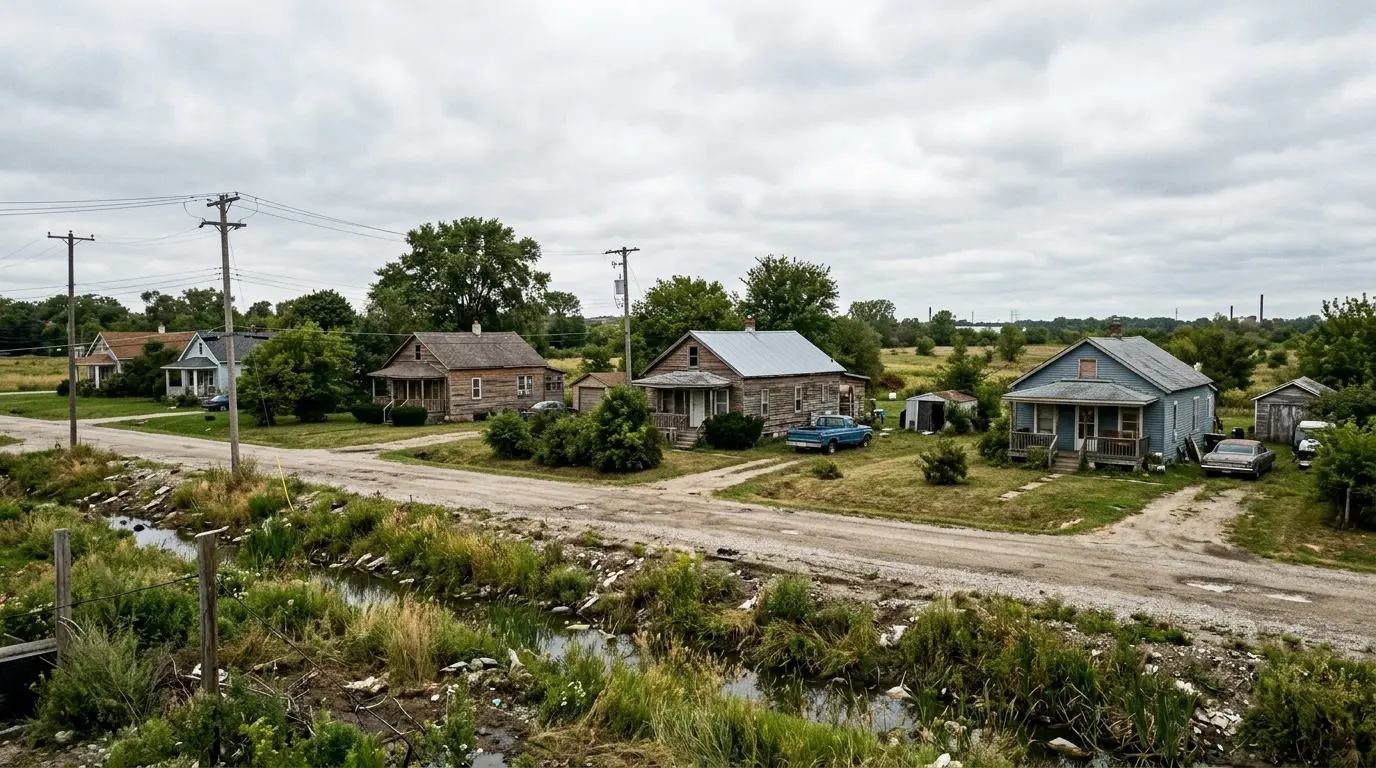
The defining condition on the Far South Side is elevation. These are the lowest-lying blocks in the city, close to the Calumet system and to ground that was wetland before it was neighbourhood, and the water table sits high enough that a full basement floor is frequently at or below it for part of the year. That single fact reorganises the priorities: the dominant plumbing question here is not what is failing inside the building but what is being held out of it.
It changes what a wet basement means, too. In most of Chicago, water in a basement is an event with a cause you can name: a storm, a blockage, a failed appliance. Here it can be a condition rather than an event: groundwater pressing against the floor and walls continuously, with the building staying dry only because a mechanical device is running. Households in this situation are often unaware of it, because it works.
The second half of the picture is the combined sewer, which behaves the same way here as everywhere else in the city and worse on flat low ground: heavy rain surcharges the main and the system looks for the lowest opening in the lowest building. So two distinct sources of water arrive by two distinct routes, they need two distinct remedies, and the first useful job is telling them apart, which is what basement flooding and sewer backup is for.
Two sources, two remedies
Groundwater comes up through the floor and walls and is a pump-and-drainage problem. Sewer water comes back through the drains and is a valve-or-overhead problem. Fixing one does nothing for the other, and buying the wrong one is the most common expensive mistake on these blocks.
Pumps as machines, not appliances
In a subdivision where the pit fills during storms, a sump pump is a storm appliance that runs a few times a year. On this side of the city it is closer to a continuous-duty machine, cycling for weeks at a stretch after a wet spring, and everything about how it should be chosen and maintained follows from that. A cast-iron pump rather than the cheapest plastic unit. A check valve that actually holds so the pit does not refill on every cycle. A discharge line routed far enough from the foundation that the water does not simply return, and pitched so it cannot freeze closed in January.
And a backup, on independent power. The argument is not a general one: if the basement stays dry because a pump keeps running, then losing power is identical to the pump failing, and the storms that raise the water table are the storms that bring the lines down. A dry basement depending on one device with one power source is one outage from a wet one. Sizing, and the honest limits of what a battery buys you, are on sump pump repair and installation.
Where a basement bathroom or laundry exists, there is a second pump doing an unrelated job: an ejector, lifting waste into the house drain from a sealed pit. Substituting a sump-grade pump into an ejector basin is a recurring and consequential error. If there is one pump in a basement with a toilet in it, that is worth checking before it becomes an emergency.
Rowhouses, bungalows and older masonry
The housing is more varied here than the rest of the South Side. Beverly, Morgan Park and Mount Greenwood have large-lot single-family stock on the higher ground of the ridge; Roseland and West Pullman are dense frame and brick; Pullman itself is nineteenth-century masonry rowhousing built as company housing and now among the oldest continuously occupied stock in the city. Each brings its own version of the same underlying materials: galvanized supply closing from the inside, cast iron drainage thinning at the horizontal runs, clay laterals to the street.
What the low ground adds is water on the outside of all of it. Cast iron house drains under a basement floor that has been wet for decades fail earlier than the same pipe in a dry basement, and foundation-adjacent supply runs corrode from the outside as well as the inside. That is why repiping conversations here tend to arrive alongside drainage conversations rather than separately, and why doing the drainage first is nearly always the right order.
The rowhouse blocks add a shared-wall complication worth naming: in party-wall construction the pipe you need to reach is sometimes on the other side of a wall you do not own, and the sensible sequence involves the neighbour before it involves a demolition tool.
Honest windows at the city’s edge
This is the farthest corner of the city from most of the metro’s crews, and pretending otherwise would be a disservice. Scheduled work here is straightforward. An overnight emergency during a regional storm, which is exactly when basements on this ground need attention, is a genuinely different promise from the same call in Bridgeport, because every crew is already committed and the drive is longer.
So the arrangement we would rather have with a household here is preventive: know the age of the pump, know whether it has a backup, know whether the drainage is protected against surcharge, and get those settled in dry weather when a visit can be booked rather than fought for. That is not a sales position, the work is cheaper in April than in the middle of a July storm, and it is the only version of this that reliably keeps a basement dry.
If water is actively rising and the source is inside the building, shut the water off at the meter before you call. If it is coming up through the drains, nothing you can do inside will stop it, and the useful thing is a realistic arrival time and a dispatcher who tells you if somebody closer can get there first.
What We Dispatch For
Work called in most often on the Far South Side
Coverage
Where this covers
Beverly and Mount Greenwood east through Roseland and Pullman, out to the East Side, Hegewisch and the Calumet blocks.
Beverly · Morgan Park · Mount Greenwood · Washington Heights · Auburn Gresham · Roseland · Pullman · West Pullman · Riverdale · South Deering · South Chicago · Calumet Heights · Jeffery Manor · East Side · Hegewisch
Common Questions
Answers before you call
My sump pump runs constantly. Is something wrong?
Not necessarily, and on this side of the city that is the important caveat. On low ground near the Calumet the pit can sit at or below the seasonal water table, which means the pump is not responding to storms at all. It is holding back groundwater continuously. Frequent cycling for weeks after a wet spring is normal in that situation rather than a fault.
What is not normal is the pit refilling immediately after each cycle. That points at a check valve that is not holding or a discharge line returning the water to the foundation, and both make the pump work far harder than it needs to. Continuous duty also means it wears out on a shorter schedule, so a cast-iron unit and a known replacement age matter more here than in most of the city.
Is a battery backup worth it?
Here, yes, and the reasoning is specific rather than a general upsell. If your basement stays dry because a pump keeps running, then the pump losing power is the same event as the pump failing, and the storms that raise the water table are the storms that take the power out. A dry basement that depends on a single device with a single power source is one outage away from a wet one.
What that argues for is a second pump with an independent power source rather than a bigger primary. Sizing and the honest limits of battery capacity are covered on the pump page; the short version is that a backup buys you hours, not days, which is usually exactly what is needed.
Do I need both a sump pump and an ejector?
If you have below-grade plumbing, then yes, and they are not interchangeable. A sump pump takes groundwater out of a pit and discharges it outside; an ejector takes waste from a basement bathroom or laundry and lifts it into the house drain. Different machines, different pits, different jobs.
Putting a sump-grade pump into an ejector basin is a substitution that happens more often than it should, and it fails early and unpleasantly. If you have a basement bathroom and only one pump down there, that is worth checking before it becomes an emergency.
Realistically, how quickly can someone get here?
Longer than the inner neighbourhoods, and you should be told the real window rather than an optimistic one. The Far South Side is the farthest corner of the city from most of the metro’s crews, and in a regional weather event, which is precisely when basements here need attention, every crew is already committed.
What that means in practice: for a flooding basement, ask for a realistic arrival time and take it into account, and shut the water off at the meter yourself if the source is inside the building. If someone closer can genuinely get there sooner, a dispatcher should say so.
Elsewhere in the City
The other sides
How long has that pump been down there?
On this side of the city a sump pump is not a storm appliance, it is a machine running much of the year, and it wears out on that schedule. Knowing its age and whether anything backs it up is worth more than any other single fact about the basement.
24/7 · Chicago metro dispatch · (833) 615-3680